Trilha Sonora
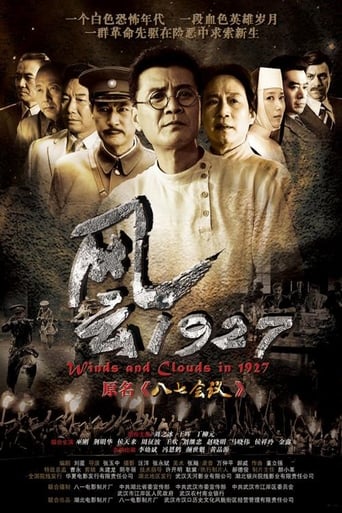
风云1927
Ano: 2014
In 1927, following the "April 12 Incident," the "May 21 Incident" occurred, leading to the massacre of numerous Communist Party members in Changsha, Hunan. This brought the Nationalist-Communist cooperation to its most critical juncture. In response, Mao Zedong, Zhou Enlai, Qu Qiubai, Li Weihan, Chen Duxiu, and Deng Xiaoping gathered in Wuhan to strategize and find a way out for the beleaguered Chinese Communist Party. Wuhan at the time was a hotbed of diverse interests, including the seemingly impartial Wuhan National Government led by Wang Jingwei, clueless foreign Communist International representatives, and various warlord armies. The Communists faced immense challenges. The "July 15" counter-revolutionary coup dashed their hopes, and subsequent struggles led to the White Terror under Chiang Kai-shek and Wang Jingwei. The Communists then launched the Nanchang Uprising and held the long-awaited emergency conference in Wuhan - the August 7 Conference (Eight-Seven Conference). This meeting marked a turning point, as it decided on armed uprising and land revolution, prioritizing the leadership of peasants in the Autumn Harvest Uprising. Notably, Mao Zedong's assertion that "political power comes from the barrel of a gun" significantly contributed to the party's survival and the course of Chinese revolution.
Tracklist
Estamos montando a trilha sonora deste título
Ainda não encontramos as faixas desta trilha. Volte em breve — estamos buscando as músicas automaticamente.