(CASTELLANO)
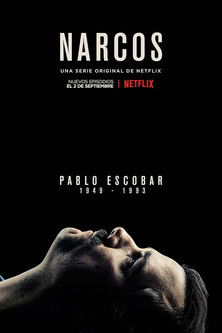
Lo que más me gusta de la serie, vista en conjunto, es que empieza pareciendo una historia sobre un monstruo concreto y termina convirtiéndose en algo bastante más amplio e incómodo. Al principio todo gira alrededor de Pablo Escobar: su ascenso, su violencia, su familia, su capacidad para ser carismático y aterrador a la vez. Pero temporada a temporada la serie va enseñando algo más duro: que el problema no era solo un hombre. El hombre cae, el mito se apaga, el cadáver llega, pero la maquinaria sigue. Cambian los nombres, los trajes, las rutas, los despachos y las formas de ejercer el poder, pero el negocio continúa respirando.
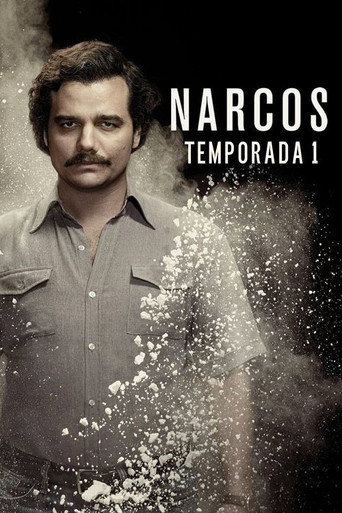
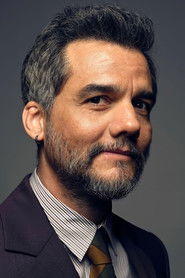
La primera temporada tiene una energía brutal. Va rápido, mezcla ficción con imágenes de archivo, usa la voz en off para dar sensación de crónica criminal y consigue que todo parezca enorme: Colombia, Estados Unidos, la DEA, los políticos, los sicarios, la policía, los jueces, la prensa, el dinero, el miedo. Wagner Moura construye un Escobar muy potente, no como villano de cómic, sino como alguien imprevisible, familiar, vulgar, brutal y casi siempre peligroso. La serie tiene ahí su gancho más evidente: ver cómo un hombre puede comprar, matar, seducir, amenazar y deformar un país entero a su alrededor. Es adictiva, muy entretenida y tiene esa mezcla de espectáculo e historia que engancha aunque sepas que está simplificando muchas cosas.
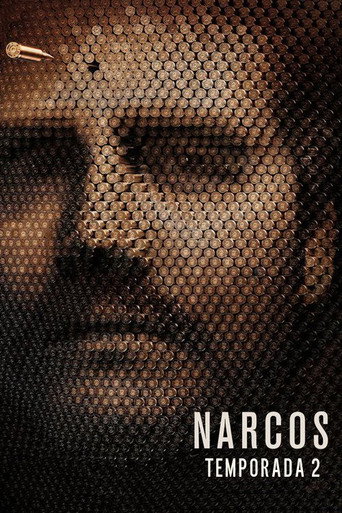
La segunda temporada me parece más oscura y, en cierto sentido, más triste. Ya no está tanto el placer del ascenso, sino la sensación de cerco, de desgaste y de final inevitable. Escobar sigue siendo el centro, pero la serie empieza a interesarse más por las consecuencias: la familia atrapada en su propio monstruo, los enemigos multiplicándose, el Estado moviéndose en zonas moralmente turbias, la violencia contaminando a todos. Aquí se nota más que no hay héroes limpios. Incluso quienes persiguen al mal terminan negociando con sombras, aceptando daños y cruzando líneas. Eso le da más densidad. No es solo "atrapar al capo"; es ver cuánto se pudre todo mientras intentas atraparlo.
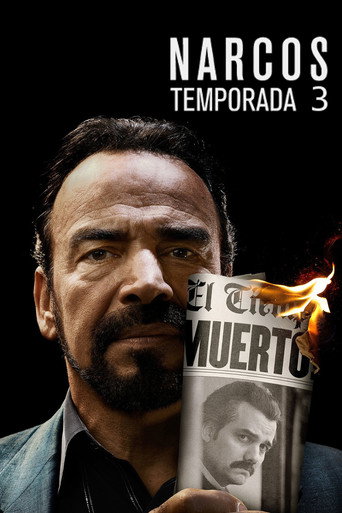
Y entonces llega la tercera temporada, que era el gran riesgo. Sin Escobar, podía haberse hundido. Pero para mí ahí está una de las mejores ideas de la serie: demostrar que el vacío del monstruo no acaba con el relato, sino que lo transforma. El cartel de Cali funciona de otra manera. Menos volcánico, menos popular, menos mitológico, pero quizá por eso más inquietante. Ya no es solo la violencia del hombre que declara una guerra abierta, sino la sofisticación empresarial del crimen, la apariencia de orden, los acuerdos, las oficinas, los contables, los teléfonos, los socios respetables. La serie se vuelve más coral y más paranoica, y Pedro Pascal ayuda muchísimo a mantener la continuidad emocional y narrativa.
Me gustó especialmente cómo cambia el punto de vista. En las dos primeras temporadas la fuerza está en Escobar y en el pulso de la persecución. En la tercera, la tensión se reparte mejor y aparece un personaje como Salcedo, que acaba siendo fundamental porque permite vivir el peligro desde dentro. Ahí la serie gana una angustia distinta: no la del tiroteo constante, sino la de estar atrapado en una estructura de la que no puedes salir sin perderlo todo. Esa temporada confirma que lo más interesante no es solo la caída de un criminal famoso, sino el tablero entero: policías, informadores, políticos, empresarios, familias, víctimas y verdugos moviéndose dentro de una guerra que nadie parece ganar de verdad.
También tiene defectos. A veces la voz en off explica demasiado, algunos personajes quedan reducidos a función narrativa y la mezcla entre didactismo, thriller y espectáculo puede resultar algo tramposa. La serie quiere informar, entretener y sacudir al mismo tiempo, y no siempre equilibra esas tres cosas con la misma finura. También hay momentos en los que la violencia corre el riesgo de volverse demasiado atractiva visualmente, aunque el relato intente no glorificarla. Pero incluso con esas reservas, pocas series han conseguido hacer tan adictiva una historia criminal basada en hechos reales sin perder del todo la sensación de estar hablando de algo profundamente enfermo.
Al final me parece una serie muy notable porque sabe evolucionar. Empieza con la fuerza casi hipnótica de Escobar, continúa con su caída y termina demostrando que el verdadero protagonista quizá nunca fue él, sino la partida. Ese cambio de escala es lo que la hace más interesante. No todas las temporadas funcionan exactamente igual, pero las tres mantienen tensión, identidad visual, ritmo y una sensación constante de peligro. Es violenta, sombría, entretenidísima y, por momentos, muy perturbadora. Una serie que engancha por el morbo del crimen, sí, pero que se queda más tiempo en la cabeza cuando entiendes que, después de cada captura y cada muerte, siempre hay alguien esperando para ocupar el sitio.
(ENGLISH)
What I like most about the series as a whole is that it begins by seeming to be the story of one particular monster and ends up becoming something much broader and more uncomfortable. At first everything revolves around Pablo Escobar: his rise, his violence, his family, his ability to be charismatic and terrifying at the same time. But season after season, the series reveals something harsher: the problem was not just one man. The man falls, the myth fades, the body arrives, but the machine keeps going. The names, suits, routes, offices and ways of exercising power change, but the business keeps breathing.
The first season has brutal energy. It moves fast, mixes fiction with archive footage, uses voice-over to create the feeling of a crime chronicle and makes everything feel enormous: Colombia, the United States, the DEA, politicians, hitmen, police, judges, the press, money and fear. Wagner Moura builds a very powerful Escobar, not as a comic-book villain, but as someone unpredictable, domestic, vulgar, brutal and almost always dangerous. That is the series' most obvious hook: watching how one man can buy, kill, seduce, threaten and deform an entire country around him. It is addictive, very entertaining and has that mixture of spectacle and history that pulls you in even when you know it is simplifying many things.
The second season seems darker to me and, in a way, sadder. It is no longer so much about the pleasure of the rise, but about the feeling of siege, erosion and an inevitable ending. Escobar remains the center, but the series begins to care more about the consequences: the family trapped inside its own monster, the enemies multiplying, the State moving through morally murky zones, violence contaminating everyone. Here it becomes clearer that there are no clean heroes. Even those chasing evil end up negotiating with shadows, accepting damage and crossing lines. That gives it more density. It is not just about catching the kingpin; it is about seeing how much everything rots while trying to catch him.
Then the third season arrives, and that was the great risk. Without Escobar, it could have collapsed. But for me that is where one of the series' best ideas appears: proving that the monster's absence does not end the story, but transforms it. The Cali cartel works differently. Less volcanic, less popular, less mythological, but perhaps for that very reason more unsettling. This is no longer only the violence of a man declaring open war, but the business sophistication of crime, the appearance of order, the deals, the offices, the accountants, the phones, the respectable partners. The series becomes more choral and more paranoid, and Pedro Pascal helps enormously to preserve emotional and narrative continuity.
I especially liked how the point of view changes. In the first two seasons, the force lies in Escobar and in the pulse of the pursuit. In the third, tension is distributed better, and a character like Salcedo becomes essential because he allows us to experience danger from the inside. There the series gains a different kind of anguish: not that of constant shootouts, but that of being trapped in a structure you cannot escape without losing everything. That season confirms that the most interesting thing is not only the fall of a famous criminal, but the whole board: police, informants, politicians, businessmen, families, victims and executioners moving inside a war nobody truly seems to win.
It also has flaws. Sometimes the voice-over explains too much, some characters are reduced to narrative function and the mixture of didacticism, thriller and spectacle can feel somewhat manipulative. The series wants to inform, entertain and shake the viewer at the same time, and it does not always balance those three aims with equal finesse. There are also moments when the violence risks becoming too visually attractive, even if the story tries not to glorify it. But even with those reservations, few series have managed to make a real-crime story so addictive without completely losing the sense that it is talking about something deeply diseased.
In the end, it seems to me a very strong series because it knows how to evolve. It begins with the almost hypnotic force of Escobar, continues with his fall and ends by proving that perhaps the real protagonist was never him, but the game itself. That change of scale is what makes it more interesting. Not every season works in exactly the same way, but all three maintain tension, visual identity, rhythm and a constant sense of danger. It is violent, somber, hugely entertaining and, at times, very disturbing. A series that hooks you with the fascination of crime, yes, but stays longer in your head when you understand that after every arrest and every death, someone is always waiting to take the empty place.
 Netflix
 Netflix Standard with Ads