ACERVO · Pelicula · 2025
Presence
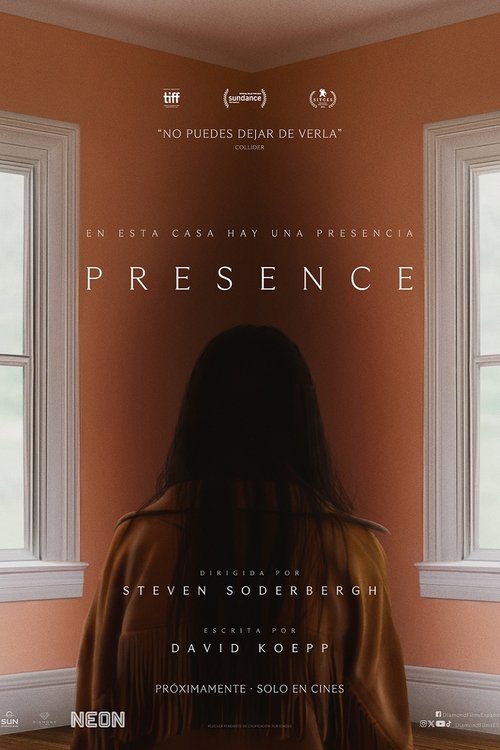
Una pareja y sus hijos se mudan a una casa suburbana aparentemente normal. Cuando ocurren eventos extraños, comienzan a creer que hay algo más en la casa con ellos. La presencia está a punto de perturbar sus vidas de formas inimaginables.
Fuente: TMDB
* 6.1 (754)DramaTerrorSuspensoEstados Unidos
Directores
Paises
Estados Unidos
Estudios
Extension 765 · The Spectral Spirit Company
Duración
84 min
Clasificación
16 años
Lenguaje SoezContenido SexualViolencia
Estreno
17/01/2025
Puntuacion
6.1 / 10 (754)
Donde ver
 Amazon Prime Video
 Amazon Prime Video with Ads
 Amazon Video
Reparto










Comentarios
Inicia sesión para comentar y debatir sobre esta obra.
Carregando
Resenas de usuarios

Marco-Hugo Landeta Vacas
★ 8.0 / 10
(CASTELLANO) Steven Soderbergh vuelve a demostrar que es capaz de renovar un género con apenas unos pocos elementos bien puestos. Presence no es una película de terror al uso; es más bien un ejercicio de observación incómoda, donde la cámara adopta el punto de vista de un fantasma que recorre la casa, silencioso, paciente y, en cierto modo, curioso. Desde el primer plano queda claro que aquí la tensión no vendrá de sustos fáciles, sino de la sensación de estar invadiendo un espacio privado.
Lo más fascinante es cómo la historia, sin grandes giros, se va impregnando de un malestar creciente. Los movimientos de cámara, siempre medidos, y el uso del fuera de campo hacen que cada habitación parezca esconder algo. El espectador, convertido en intruso, empieza a notar que lo que acecha no es solo algo sobrenatural, sino también un conjunto de rencores, secretos y culpas familiares que flotan en el aire.
Soderbergh construye un relato que se toma su tiempo, lo que puede desesperar a quien espere un festival de sustos. Pero esa misma calma es la que da peso a los momentos más intensos, cuando una mirada o un silencio prolongado dicen más que cualquier diálogo. Es un terror que se cuela sin hacer ruido, pero que deja huella.
Las interpretaciones son sólidas, aunque quizá algún personaje merecía más desarrollo para que su destino nos golpeara con más fuerza. Aun así, el elenco sabe transmitir esa tensión soterrada que recorre toda la historia, y eso mantiene el interés incluso en los pasajes más pausados.
No todo funciona a la perfección. Hay un par de escenas que parecen buscar un simbolismo excesivo y rompen un poco el equilibrio, y el clímax, aunque inquietante, puede dejar con la sensación de que faltó un golpe final más contundente. Sin embargo, la experiencia global es tan hipnótica que esos detalles no empañan el resultado.
Presence es, en definitiva, una mirada distinta al cine de fantasmas: menos enfocada en el susto y más en la atmósfera, en cómo lo invisible puede alterar lo cotidiano. Soderbergh firma una película que, más que dar miedo, se queda rondando en la cabeza como una presencia silenciosa que no sabes si quieres que se vaya o que se quede.
(ENGLISH) Steven Soderbergh once again proves he can reinvent a genre with just a few well-placed elements. Presence is not a conventional horror film; it’s more of an exercise in unsettling observation, with the camera adopting the point of view of a ghost silently roaming the house—patient, quiet, and oddly curious. From the very first shot, it’s clear that the tension won’t come from cheap jump scares, but from the feeling of invading a private space.
What’s most fascinating is how the story, without big twists, gradually fills with a growing unease. The measured camera movements and clever use of off-screen space make every room feel like it’s hiding something. As intruders, viewers begin to sense that what’s haunting the house isn’t just supernatural—it’s also made up of grudges, secrets, and unspoken guilt lingering in the air.
Soderbergh crafts a tale that takes its time, which may frustrate those expecting a scare-fest. Yet this very patience gives weight to the most intense moments, when a glance or a prolonged silence says more than any line of dialogue. It’s a kind of horror that slips in quietly but lingers afterward.
The performances are solid, though some characters could have used more depth so their fates hit harder. Still, the cast captures the simmering tension that runs through the story, keeping the audience engaged even during the quieter passages.
Not everything works perfectly. A couple of scenes reach too far for symbolism and slightly upset the balance, and while the climax is unsettling, it may leave some wishing for a sharper final blow. Yet the film’s hypnotic pull more than makes up for it.
Presence ultimately offers a different take on ghost stories—less about scares, more about atmosphere and the way the unseen can disrupt the everyday. Soderbergh delivers a film that doesn’t so much frighten as it lingers in your mind like a silent presence you’re not sure you want to leave

Martin Oaks
★ 6.0 / 10
**Voyeurismo espectral**
La turbulenta vida de una familia de clase alta que, en un intento por reconstruir lazos fracturados y empezar de nuevo, se muda a una espaciosa y luminosa casa en un suburbio apacible, no parece dejar atrás la disfunción inherente a la relación paterno filial con la hija adolescente Chloe, que todavía lidia con el duelo por la pérdida reciente de su mejor amiga. Pronto, los problemas familiares se acentúan y se ven exacerbados por una serie de fenómenos inexplicables que sugieren la existencia de una entidad no corpórea y que, de forma inexplicable, Chloe relaciona con su amiga fallecida.
El elemento distintivo y fundamental de la narrativa reside en que toda la acción es observada y filmada desde el punto de vista de esta "presencia" o fantasma. El espectador es forzado a adoptar la perspectiva ingrávida y voyeurista del ente, moviéndose por la casa y siendo testigo mudo de los secretos, las discusiones y las crisis que se despliegan en el seno familiar, difuminando así la línea entre el thriller psicológico, el drama familiar y el cine de espectros.
Steven Soderbergh, un cineasta siempre propenso al experimento formal (no olvidemos la original “Unsane” de 2018, rodada íntegramente con un iPhone, cuando eso aún era una novedad) entrega con “Presence” una virtuosa meditación sobre la mirada y la observación. La decisión de narrar la totalidad del metraje a través de la perspectiva subjetiva de la entidad fantasmal es el motor temático que revitaliza un género en ocasiones anquilosado. El uso constante de una cámara gran angular y los ingeniosos planos secuencia consiguen que la presencia invisible se sienta tan palpable como los miembros de la familia. Esta elección formal sumerge al espectador en un voyeurismo espectral que resulta más perturbador que cualquier susto fácil. No es el impacto lo que busca Soderbergh, sino una tensión sutil y constante que emana del conocimiento de que se está viendo algo a través de unos ojos que no deberían estar ahí.
El guión de David Koepp es lo suficientemente incisivo como para que el drama familiar que se desarrolla bajo la superficie sea tan interesante como la intriga sobrenatural. La película logra un equilibrio notable: bajo la apariencia de un thriller de terror se esconde un drama de introspección espiritual donde la verdadera "maldad" parece residir en las dinámicas humanas y no en el espectro en sí. “Presence” no es una obra maestra en absoluto pero, en última instancia, es un triunfo estilístico e inmersivo que demuestra la inagotable creatividad de su director, ofreciendo una experiencia cinematográfica curiosa e inquietante.
Palabras clave
husband wife relationshipnew jerseyhaunted housegriefinterracial marriagepsychological thrillerentitydeathreal estate agentghost
Links relacionados