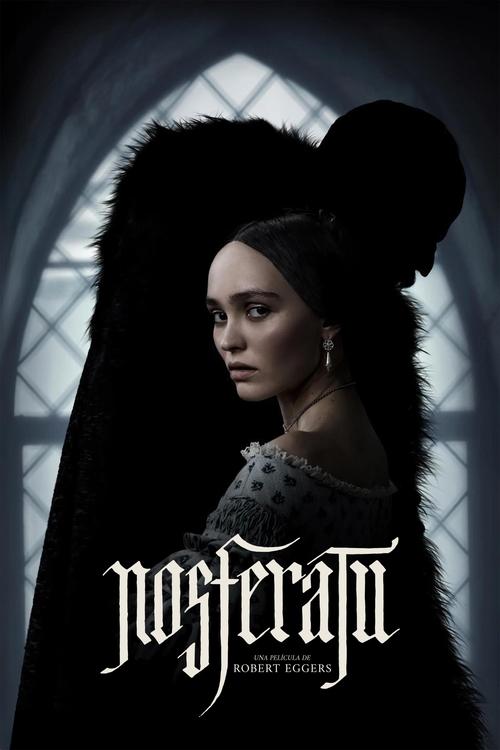
(CASTELLANO) Hay películas que, más allá de su historia, te atrapan por el ambiente que crean desde el primer fotograma. La nueva versión de Nosferatu de Robert Eggers es justo eso: una inmersión total en un mundo de sombras, humedad y supersticiones, donde el miedo no se grita, se respira. Aquí no hay prisas; cada plano está trabajado al milímetro, con una fotografía que parece pintada con luz de vela y una puesta en escena que te obliga a fijarte en cada detalle, incluso cuando preferirías apartar la mirada.
Eggers no se limita a homenajear el clásico de Murnau: lo reviste con una estética enfermiza y elegante al mismo tiempo, que se siente tan vieja como nueva. Bill Skarsgård encarna a un Conde Orlok inquietante, viscoso, casi hipnótico, mientras Lily-Rose Depp aporta un contrapunto de fragilidad y fuerza que eleva el relato. No es la típica historia de Drácula que hemos visto una y otra vez; aquí el terror se mezcla con un subtexto sobre poder, corrupción y deseo que se arrastra como una niebla pesada.
La ambientación es impecable: aldeas empapadas de superstición, pasillos interminables y un aire malsano que recuerda a los terrores más primitivos del cine. La música y el diseño sonoro juegan un papel fundamental, reforzando esa sensación de amenaza que nunca desaparece. No hay sustos baratos; el miedo crece poco a poco, como si la película te fuera cerrando la puerta detrás sin que lo notes.
Puede que a algunos les parezca demasiado respetuosa con el material original y poco arriesgada en ciertos tramos, pero lo cierto es que su fuerza no reside en reinventar la historia, sino en hacerla sentir viva otra vez. Es un viaje que no se apoya en el ritmo acelerado del terror actual, sino en la construcción paciente de un clima que te deja clavado en la butaca.
En un panorama saturado de reinterpretaciones modernas y sustos prefabricados, esta Nosferatu se siente como un acto de resistencia: cine de terror artesanal, pensado para ser contemplado y temido a partes iguales. Cuando llega el plano final, con esa mezcla de belleza y repulsión, queda claro que Eggers no ha hecho un simple remake: ha tejido una pesadilla que, como el propio vampiro, se te queda pegada a la piel mucho después de que termine.
(ENGLISH) Some films, beyond their story, capture you through the atmosphere they create from the very first frame. Robert Eggers’ new version of Nosferatu is exactly that: a total immersion into a world of shadows, dampness, and superstitions, where fear is not shouted but breathed. There’s no rush here; every shot is crafted with meticulous care, with cinematography that feels painted in candlelight and staging that forces you to notice every detail, even when you’d rather look away.
Eggers doesn’t just pay tribute to Murnau’s classic—he wraps it in an aesthetic that is both sickly and elegant, feeling as old as it is new. Bill Skarsgård embodies a disturbing, viscous, almost hypnotic Count Orlok, while Lily-Rose Depp brings a counterpoint of fragility and strength that elevates the narrative. This is not the typical Dracula story we’ve seen countless times; here, horror blends with a subtext of power, corruption, and desire that creeps in like a heavy fog.
The setting is flawless: villages steeped in superstition, endless corridors, and a foul atmosphere that recalls the most primitive terrors of cinema. The music and sound design play a crucial role, reinforcing that sense of constant threat. There are no cheap scares; fear grows gradually, as if the film were quietly closing the door behind you without you noticing.
Some may find it too respectful of the source material and not daring enough at times, but its strength doesn’t lie in reinventing the story—it’s in making it feel alive again. This is a journey that doesn’t rely on the fast-paced rhythms of modern horror but on the patient construction of a mood that pins you to your seat.
In a landscape oversaturated with modern reinterpretations and prefab scares, this Nosferatu feels like an act of resistance: artisanal horror cinema, designed to be both admired and feared. By the time the final shot arrives, with its blend of beauty and repulsion, it’s clear Eggers hasn’t made a simple remake—he’s woven a nightmare that, like the vampire himself, clings to your skin long after it’s over.
 Movistar Plus+
 Movistar Plus+ Ficción Total
 Apple TV Store
 Rakuten TV
 Amazon Video