
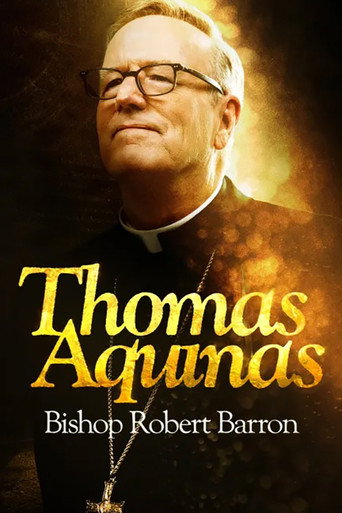
In our introductory lecture, we encounter the life, times, and cultural context of Thomas Aquinas, the 13th-century Dominican friar and theologian who represents the height of medieval scholastic thought. We examine his embrace of…
In lecture two, we study Thomas Aquinas's approach to God, the central focus of his life. We examine why Aquinas rejects Anselm's ontological argument, preferring empirical proofs drawn from worldly observation. We analyze three of his…
In lecture three, Robert Barron explores Thomas Aquinas’s understanding of God’s attributes beyond his famous Five Ways. Through the via negativa (negative way) and via positiva (positive way), Aquinas develops a vision of divine…
In lecture four, we learn Thomas Aquinas’s understanding of God’s will and love, showing that God’s will flows from His perfect knowledge of goodness, leading to His self-love and love for creation. We then examine Aquinas's treatment of…
In lecture five, we explore the doctrine of creation through Thomas Aquinas’s teaching on why God creates despite His perfection and self-sufficiency. Aquinas argues that God creates not from need but from the Platonic principle of “bonum…
In lecture six, Bishop Barron examines God’s providence and how God directs the world He created, using the metaphor of an author and a novel to illustrate God’s absolute yet non-competitive relationship with creation. We explore the…
In lecture seven, we consider Thomas Aquinas's philosophical and theological anthropology—understanding humanity in light of God—particularly focusing on the complex relationship between body and soul. We trace the historical debate from…
In our eighth and final lecture, we reflect on Thomas Aquinas’s ethics as the means by which human beings, created in God’s image, return to God through a teleological framework centered on beatitudo (happiness) as humanity’s ultimate…