**The midlife void**
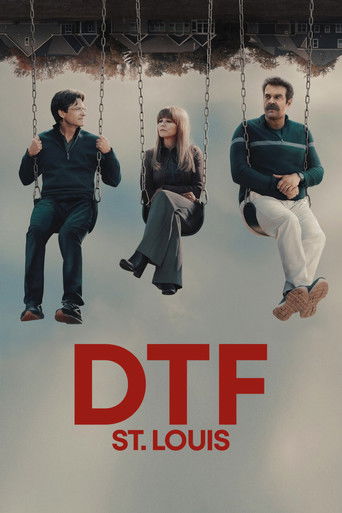
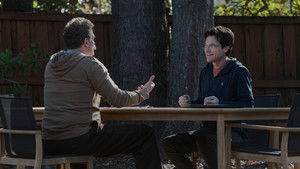
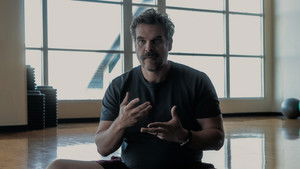
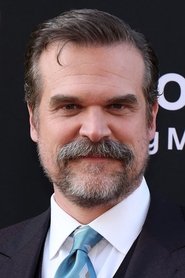
I think seven 50-minute episodes feel long for a story like this, quite simple and devoid of narrative substance, in which essential plot points are revealed at the irritating pace of a Malaysian drop. The leitmotif is a lethal love triangle fueled by a midlife crisis, where Clark Forrest (Jason Bateman), a well-known local television weatherman, and Floyd Smernitch (David Harbour), his new sign language interpreter for deaf viewers, develop a very close and deep friendship, confessing their feelings of being stuck in their respective marriages. This leads them to sign up for the app “DTF St. Louis” (an acronym for “DareToFuck”), a dating app specifically designed for married people to have discreet affairs.
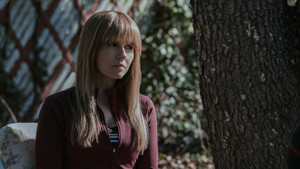
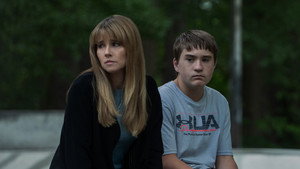
The story is structured through a non-linear narrative that begins with a mystery: one of those involved dies, and detectives Donoghue Homer (Richard Jenkins) and Jodie Plumb (Joy Sunday) must reconstruct the events. Through chronological jumps and the constant reinterpretation of past (sometimes even redundant) scenes, the series unravels subplots such as the affair between Clark and Carol (Linda Cardellini), Floyd's wife, a very timely insurance policy, and lies intertwined with an elaborate online deception involving fake profiles initially conceived to alleviate Floyd's deep depression, but which ultimately triggers fatal consequences. The script's chronological puzzle works organically to maintain suspense, sometimes irritating, forcing the viewer to reevaluate the characters' intentions as new angles of the same sequence are revealed.
This supposedly dark comedy of errors, tinged with existentialist crime drama, cleverly avoids the conventional formulas of "true crime" or traditional police thrillers. Creator and director Steve Conrad has focused on dissecting apathy, emotional deficiencies, and the unspoken desires of the suburban bourgeoisie, making the protagonists vulnerable characters who could have been considered morally questionable. Furthermore, Conrad's humor, characterized by subtle absurdity and awkward, sexually charged situations, is deliberately eccentric.
Those looking for a series with a swift criminal resolution may perceive certain passages as somewhat repetitive in its exploration of the existential void of middle age. However, the final work as a whole undoubtedly stands as a rigorous auteur piece that uses criminal satire to X-ray the ramifications of modern dissatisfaction, solidifying the tragicomic and iconoclastic style that defines Conrad's work.
 HBO Max Amazon Channel
 YouTube TV
 Spectrum On Demand
 HBO Max
 Amazon Video
 Apple TV Store
 Fandango At Home