COLLECTION · Series · 2012
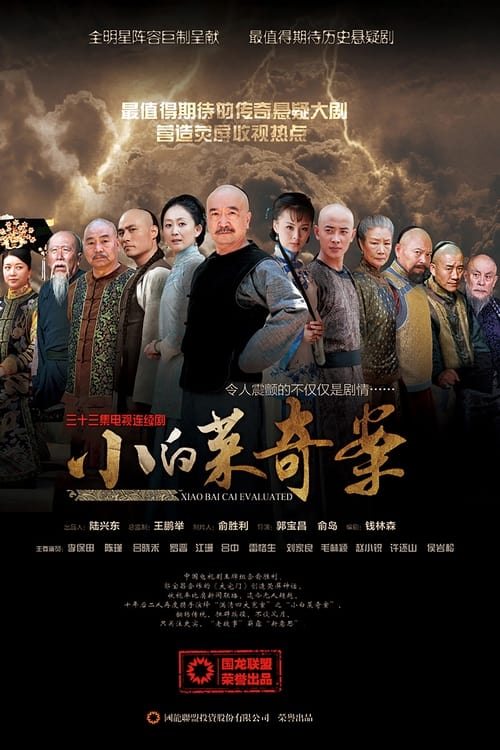
小白菜奇案
Original title
**Introduction**
The year 1873, in the tenth month of the twelfth year of the reign of Emperor Tongzhi, a murder case shook the town of YuHang in Zhejiang Province's YuHang County. A shop assistant at a tofu store, Guo Pinlian, was found dead under mysterious circumstances. County Magistrate Liu Xiantong suspected local jinshi (advanced scholar) Yang Naiwu of seducing Guo's wife, Bai Xiugu, and poisoning Guo to death. He subjected Yang and Bai to severe interrogation, ultimately charging them with "adultery and murder" and reporting the case to the Hangzhou Prefectural Government and the Zhejiang Provincial Government. Both the prefecture and the province upheld the original verdict and forwarded it to the Ministry of Justice. However, Yang's sister, Yang Shuying, persistently appealed to the capital, eventually reaching the imperial court. A group of upright officials there took up the case, leading to an imperial edict ordering an exhumation and autopsy. The truth was finally revealed, and the wronged parties were vindicated.
**Essay**
The case of Yang Naiwu and Bai Xiugu, which unfolded in the late 19th century, is a stark reminder of the power dynamics and societal norms of the time. The initial verdict, based on suspicion and prejudice, highlights the vulnerability of the common people in the face of authority. Liu Xiantong's hasty judgment, driven by his suspicion of Yang's status as a jinshi, led to a gross miscarriage of justice. The subsequent appeals process, however, demonstrated the potential for justice to prevail, even in the face of overwhelming odds.
The role of Yang Shuying, Yang Naiwu's sister, is pivotal in this narrative. Her persistence in seeking justice, despite the risks involved, is a testament to her courage and determination. Her actions underscore the importance of individual agency in challenging injustice, even in a society where power was heavily concentrated.
The imperial edict ordering an exhumation and autopsy was a turning point in the case. This intervention from the highest authority marked a recognition of the need for a fair and thorough investigation. The autopsy results ultimately exposed the initial verdict's flaws, leading to the exoneration of Yang and Bai.
The case of Yang Naiwu and Bai Xiugu serves as a cautionary tale about the dangers of prejudice and the importance of thorough investigation in the pursuit of justice. It also highlights the role of individual courage in challenging injustice, even in the face of overwhelming odds.
**Conclusion**
The vindication of Yang Naiwu and Bai Xiugu was a victory for justice, but it was also a reflection of the societal norms and power dynamics of the time. While the case ended tragically for Guo Pinlian, it served as a catalyst for change, demonstrating the potential for justice to prevail even in the most challenging circumstances. The lessons from this case continue to resonate today, reminding us of the importance of fairness, thorough investigation, and individual courage in the pursuit of justice.
* 7.0 TMDB (1)China