COLLECTION · Movie · 1973
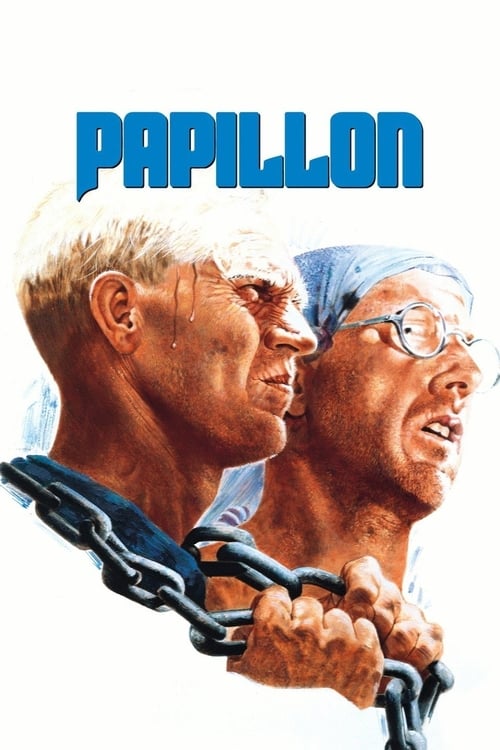
Papillon
A man befriends a fellow criminal as the two of them begin serving their sentence on a dreadful prison island, which inspires the man to plot his escape.
Source: TMDB
* 7.8 (2,131)CrimeDramaUnited States · France
Directors
Countries
United States · France
Studios
Allied Artists Pictures · Solar Productions · Corona-General
Runtime
151 min
Age rating
PG(US — parental guidance)
Extreme ViolenceExplicit SexStrong LanguageDrug Use
Release
16/12/1973
Score
7.8 / 10 (2,131)
Where to watch
 Kanopy
 Plex
Plex Tubi TV
 Amazon Video
 Apple TV Store
 Fandango At Home
 Spectrum On Demand
Cast

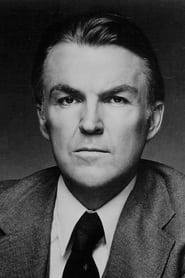
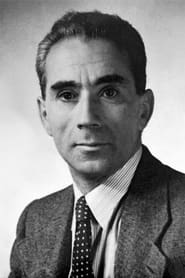
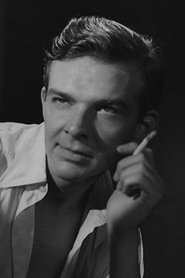

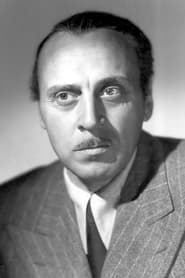
Appears in lists

Comments
Sign in to comment and discuss this title.
Carregando
User reviews

John Chard
★ 9.0 / 10
Grim and authentic telling of Henri "Papillon" Charrière's time at Devil's Island.
Directed by Franklin J. Schaffner (Planet Of The Apes/Patton), Papillon is adapted for the screen by Dalton Trumbo & Lorenzo Semple Jr. from notorious French felon Henri "Papillon" Charrière's own novel. It stars Steve McQueen (Papillon) & Dustin Hoffman (Louis Dega), is primarily shot in Jamaica & Spain with Fred J. Koenekamp (The Towering Inferno) on photography duties and Jerry Goldsmith provides the score.
Henri "Papillon" Charrière was a crook, a bad egg, he however was sent to the notorious and inescapable prison fortress of Devil's Island for a murder he didn't commit. The film, as is the book, is a fictionalised account of Charrière's time at the penal colony.
The film is probably best described as being a stirring drama of friendship under duress, endurance and opportunism, all neatly blended with an adventure based heart. Schaffner directs it with great technical skill, for in a film with minimal dialogue, he manages to perfectly stifle the viewer with a hot sweaty atmosphere. This is crucial for us to feel the confines of this penal colony life. These men are doing hard time, lets not soft soap it Hollywood style, lets get the feel right, something, that much like Don Siegel also did in 79 with his excellent Escape From Alcatraz, Schaffner does exceptionally well. He is helped enormously by two fabulous performances from McQueen & Hoffman.
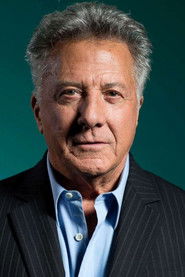
McQueen is in his element as Papillon. Always an actor whose ability for dominating scenes without using histrionic acting was undervalued, Papillon goes some way to readdressing the myth that he was more about iconography than actual talent. His solitary confinement scenes are sublime, and this without saying barely a word. As Papillon staves off starvation, madness and disease, McQueen has such a powerful and believable presence that he pulls us into that five by five paces cell alongside him. Incredible! Once again though the Academy ignored McQueen's excellent work and the film only received just the one Oscar nomination for Goldsmith's pinging tropical score. Hoffman's great work was something of a given, meticulous as usual in his preparation (he had studied for weeks about penal colony life), he is the perfect foil for McQueen and the relationship between them is tender yet never twee. Fine support also comes from Anthony Zerbe as a compassionate leader of a leper colony & Victor Jory as an Indian Chief.
The production was an expensive one, with the original budget of $4 million ballooning to $14 million, making it the most expensive film of 1973. A couple of scripts were jettisoned (money down the drain) before Schaffner enlisted Trumbo to write the screenplay. A good move because Trumbo was able to flesh out character relationships that didn't exist in the source novel. Hoffman himself was adamant that he would only play Dega if the film steered away from a buddy buddy formula and gave Dega intelligent integrity. He got it, which is credit to Trumbo since the Dega character is barely formed in the novel, in fact the film version is an amalgamation of several penal colony characters. Trumbo was rewarded with not only a considerable paycheck, but also a bit part in the movie as the colony commandant early in the piece.
Initial critical reaction to the film was harsh, but the public didn't agree since the theatres were packed and the film made almost $50 million Worldwide. This made it Allied Artists most successful film ever. It has since garnered a massive fan base and has been favourably reassessed by a new wave of critics. Those old complaints about it being too sombre and too enduring to get through just don't add up. One only has to note the thematics and essence of the story to know that this is indeed fact. 8/10
John Chard
★ 9.0 / 10
Grim and authentic telling of Henri "Papillon" Charrière's time at Devil's Island.
Directed by Franklin J. Schaffner (Planet Of The Apes/Patton), Papillon is adapted for the screen by Dalton Trumbo & Lorenzo Semple Jr. from notorious French felon Henri "Papillon" Charrière's own novel. It stars Steve McQueen (Papillon) & Dustin Hoffman (Louis Dega), is primarily shot in Jamaica & Spain with Fred J. Koenekamp (The Towering Inferno) on photography duties and Jerry Goldsmith provides the score.
Henri "Papillon" Charrière was a crook, a bad egg, he however was sent to the notorious, inescapable, prison fortress of Devil's Island for a murder he didn't commit. The film, as is the book, is a fictionalised account of Charrière's time at the penal colony.
The film is probably best described as being a stirring drama of friendship under duress, endurance and opportunism, all neatly blended with an adventure based heart. Schaffner directs it with great technical skill, for in a film with minimal dialogue, he manages to perfectly stifle the viewer with a hot sweaty atmosphere. Something that is crucial for us to feel the confines of this penal colony life. These men are doing hard time, lets not soft soap it Hollywood style, lets get the feel right, something, that much like Don Siegel also did in 79 with his excellent Escape From Alcatraz, Schaffner does exceptionally well. He is helped enormously by two fabulous performances from McQueen & Hoffman.
McQueen is in his element as Papillon. Always an actor whose ability for dominating scenes without using histrionic acting was undervalued, Papillon goes some way to readdressing the myth that he was more about iconography than actual talent. His solitary confinement scenes are sublime, without saying barely a word. As Papillon stave's off starvation, madness and disease, McQueen has such a powerful and believable presence, he pulls us into that five by five paces cell with him. Incredible! Once again tho the Academy ignored McQueen's excellent work and the film only received the one Oscar nomination for Goldsmith's pinging tropical score. Hoffman's great work was something of a given, meticulous as usual in his preparation {he had studied for weeks about penal colony life}, he is the perfect foil for McQueen and the relationship is tender yet never twee. Fine support also comes from Anthony Zerbe as a compassionate leader of a leper colony & Victor Jory as an Indian Chief.
The production was an expensive one, with the original budget of $4 million ballooning to $14 million, making it the most expensive film of 1973. A couple of scripts were jettisoned {money down the drain} before Schaffner enlisted Trumbo to write the screenplay. A good move because Trumbo was able to flesh out character relationships that didn't exist in the source novel. Hoffman himself was adamant that he would only play Dega if the film steered away from a buddy buddy formula and gave Dega intelligent integrity. He got it, which is credit to Trumbo since the Dega character is barely formed in the novel, in fact the film version is an amalgamation of several penal colony characters. Trumbo was rewarded with not only a considerable paycheck, but also a bit part in the movie as the colony commandant early in the piece.
Initial critical reaction to the film was harsh, but the public didn't agree since the theatres were packed and the film made almost $50 million Worldwide. Making it Allied Artists most successful film ever. It has since garnered a massive fan base and has been favourably reassessed by a new wave of critics. Those old complaints about it being too sombre and too enduring to get thru just don't add up. One only has to note the thematics and essence of the story to know this fact. 9/10

Filipe Manuel Neto
★ 9.0 / 10
**A classic film with a remarkable story and great actors.**
This is a work that almost everyone remembers if the theme is films about the prison environment. It's a classic that takes us to a universe of pain, suffering, deprivation and fight against oppression, solidly based on a somewhat autobiographical book by Henri Charriere, called Papillon, a Frenchman who was imprisoned for decades in the penal colony of French Guiana and wrote a book that should be a memoir, but is so full of inventions that it deserves to be considered fiction inspired by real bases. Of course, the issue doesn't matter much to the film: let's forget the man and focus on the character, his alter-ego.
Directed by Franklin J. Schaffner and released in 1973, it was filmed in Spain and Hawaii. And taking into account that the real prison was abandoned, a faithful setting was created in Jamaica, with some shots filmed in the real location appearing in the end credits. An interesting note: needing a tropical filming location, the production thought it was a good idea to go to a poor country, famous for its soft drugs, in the 1970s. It is, therefore, not surprising that works in Jamaica were marred by robberies and plunder, and by an extraordinary abundance of good marijuana. In addition to the good design of sets, costumes and props, and an inspired and elegant cinematography, the film has a very well done soundtrack by Jerry Goldsmith, which is worth listening to and appreciating in itself.
With almost two and a half hours in length, the film focuses on portraying the poor conditions of that huge penal colony, and the mistreatment to which the inmates were subjected. I think this contributed greatly to the film's success at the box office: in the aftermath of recent protests, May '68, the Sexual Revolution and peace movements, a film where a single and persistent man faces an entire system of oppression and violence is doomed to success. Specialized critics, however, were not at all convinced, and made harsh comments about the film. Shortly afterwards, at the bizarre 1974 Oscar ceremony, the film was largely ignored, losing the only award for which it had been nominated (Best Dramatic Original Score). But considering the way it has persisted, stood the test of time and remained popular, perhaps the critics and Oscar judges were all wrong.
However, the success of this film cannot be attributed solely to a good story released at a propitious time, and convincingly told and acted. Steve McQueen is a key part of this success, thanks to an incredible dramatic interpretation, one of the best in his artistic career. The actor manages to express, in his face and mannerisms, the pain and tenacity of the character he embodies, and commits himself entirely to what he is doing. Next to him was also Dustin Hoffman, in a very interesting and elegant work that the actor fully responded to. On a much lower level, the film has positive contributions from Woodrow Parfrey, Don Gordon, Ratna Assan and Val Avery.

Wuchak
★ 7.0 / 10
_**The living hell of a penal colony in equatorial South America during the 30s**_
Henri Charrière’s account of his experiences from 1933-1945 involving the penal colony of Cayenne in French Guiana, South America, are chronicled, including solitary confinement, escape attempts, dwelling with Goajira Indians (in northeastern Columbia) and living on Devil's Island. Steve McQueen plays Henri, nicknamed Papillon (aka ‘Butterfly’ due to his chest tattoo), while Dustin Hoffman plays his friend Louis Dega.
"Papillon" (1973) is a realistic ‘prison film’ and probably more accurate than Charrière’s account based on his memory, which was told to a professional writer some three decades after the events. Keep in mind that Charrière had a reputation for being a great storyteller and the authenticity of a lot of the 560-page book has been seriously challenged. The movie only offers the gist of the real-life account and no doubt got it more accurate.
Whilst cinephiles generally praise the movie other respectable people criticize it, suggesting that the viewer hopes Papillon will escape so that the film will end (lol). I suspect this is mainly due to the long solitary confinement sequences in the first half, which definitely help the viewer grasp what a living hell it would be. Speaking of which, Charrière never said in his account that he ate bugs in solitary confinement or was in total darkness.
The second half is thankfully more adventuresome so, if the miserable solitary confinement sequences tempt you to quit watching, hang in there. There are similarities to McQueen’s earlier “Nevada Smith” (1966), which has a more compelling story.
The film runs 2 hours, 31 minutes, and was shot at various locations in Spain and Jamaica. For instance, the penal colony scenes were filmed in Falmouth, Jamaica. Meanwhile Steve McQueen’s famous cliff-jumping stunt near the end actually took place at cliffs in Maui, Hawaii.
GRADE: B

CinemaSerf
★ 7.0 / 10
Steve McQueen is superb as unlucky safe-cracker Henri "Papillon" Charrière, an innocent man convicted of murder and sentenced to imprisonment in the French penal colony at French Guiana. Once there, he learns quickly to appreciate the sheer brutality of a prison where any semblance of decency and humanity has been long abandoned. He allies himself with "Dega" (Dustin Hoffman), the rather wealthy, calculating, forger who fully expects his release papers to arrive any day! McQueen agrees to keep an eye on Hoffman meantime, in return for enough funds to enable him to try to escape too. Over the course of their incarceration, they become unlikely friends combatting the harsh, at times lethal, prison regime and trying to keep safe from their equally savage colleagues - each with an axe, of some sort, to grind. I'm not Hoffman's biggest fan, he tends to mimic rather than act - but I'd say that this is McQueen's finest, grittiest, performance - and the sense of pain, deprivation and hope he elicits are captivating to watch. There are some pictures at the end of the facility as it looked in the early 1970s - evocative of just how cruel these places were.
Keywords
prisonescapeprison escapejunglesolitary confinementbased on memoir or autobiographyremote islandleper colonylabor campcorrupt official
Related links